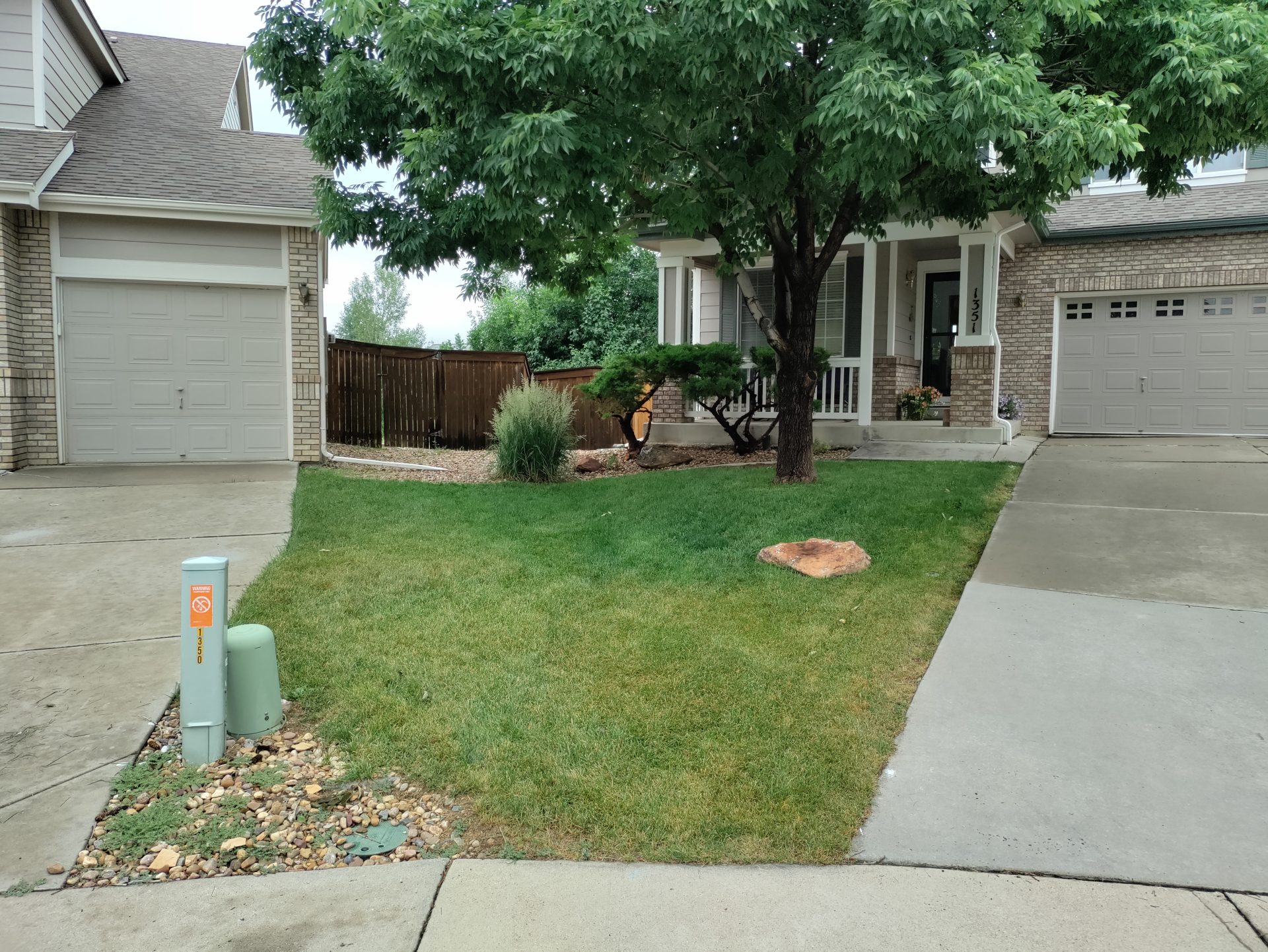
For HOA boards and property managers in the Colorado Front Range, most landscape decisions come down to cost. This HOA xeriscaping cost analysis breaks down what it really takes to convert Kentucky bluegrass to a native, water-wise landscape—and whether the investment makes financial sense over time.
When considering a shift from traditional turf to xeriscaping, the biggest question is simple: Is it worth the upfront investment?


In Colorado—where water is expensive, drought is common, and maintenance costs keep climbing—the answer is yes. Xeriscaping is no longer just environmentally responsible; it’s a financially smart decision.
This post breaks down:
- Upfront project costs
- Ongoing operational savings
- A realistic ROI timeline for HOAs
Upfront Costs: What to Budget for an HOA Turf Conversion
Most HOAs hesitate because of the initial project cost. In Northern Colorado, a full turf conversion typically ranges:
➤ $5.00–$10.00 per square foot
Typical Cost Components
| Expense Category | Description | Cost Impact |
| Turf Removal | Removing existing bluegrass and hauling away debris | Medium |
| Soil Amendment | Adding compost/organics to prep for native plants | Low–Medium |
| Irrigation Conversion | Switching from spray heads to drip irrigation | Medium–High |
| Plants + Installation | The main design element; depends on density | High |
| Hardscape + Mulch | Rock, pathways, ground cover | High (materials) |
Rebates Reduce Costs Immediately
If your HOA captures available programs (e.g., Fort Collins’ $1.50/sq ft rebate), your net project cost can drop by 15–30%. This alone shortens your payback period by several years.
Learn more about Northern Colorado’s turf removal rebate programs
To help HOA boards plan strategically, we use this Master Planning Tool to evaluate turf conversion options by hydrozone, projected water savings, installation costs, and 10-year budget impact. This approach ensures your decisions are financially responsible while maximizing water efficiency.

As shown, not all turf needs removal. By targeting high- and moderate-water-use zones first, HOAs can achieve meaningful water and cost savings while spreading installation expenses over multiple phases. ROI for native turf and xeric shrub conversions is typically 6–12 years, depending on water use, project scale, and available rebates.
Operational Savings: Where the Money Stays
This is where xeriscaping shines. Once installed and established, it saves HOAs money every single year.
Water Savings
Kentucky Bluegrass needs 25+ inches of irrigation per year.
Native plants need 5–10 inches.
Most HOAs see 60–80% water use reduction, which directly lowers monthly operating expenses.
Water Allotments: Why Savings Vary by Community
Not all HOAs experience water savings the same way. Many Front Range municipalities bill irrigation water using seasonal allotments or tiered usage budgets, not just flat per-gallon pricing.
Here’s how that affects ROI:
- Water budgets / allotments:
HOAs are often allocated a seasonal irrigation allowance based on irrigated area and plant type. Exceeding that allotment triggers higher penalty rates, while staying below it results in minimal savings beyond the base charge. Fort Collins Loveland tiered irrigation water rates. - What xeriscaping changes:
Turf conversion reduces total irrigated area and plant water demand, which:- lowers the HOA’s assigned water budget in future seasons
- reduces the risk of exceeding allotments during hot or dry years
- protects against sudden cost spikes during drought restrictions
- Why savings may not appear immediately:
In communities that were already irrigating conservatively and staying within their allotment, year-one water bill reductions may be modest. The real financial benefit shows up over time through:- avoided penalty tiers
- long-term rate increases
- reduced exposure to drought surcharges
Bottom line:
Xeriscaping provides cost stability and risk reduction, even when immediate dollar savings vary.
Lower Maintenance Costs
Xeriscaped areas require significantly less work from your landscaping contractor after the first year:
- Less mowing: Seasonal mowing in native turf
- Less fertilizer or pesticides: Natives are resistant to local pests
- Less weeding Post-Establishment: While new beds require initial weeding, mature xeriscapes with proper mulch coverage require minimal ongoing weed maintenance
These recurring savings add up quickly — which leads to the ROI.
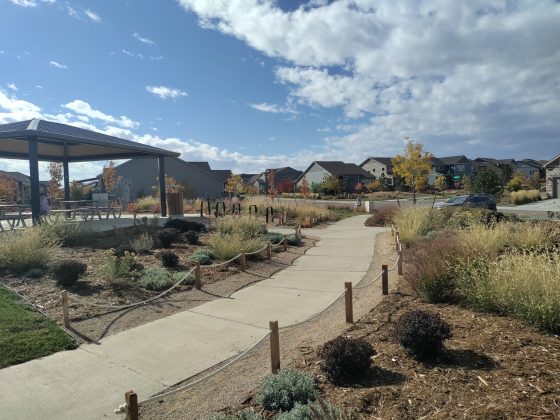


HOA Xeriscaping Cost Analysis: ROI Timeline for Front Range Communities
Determining a precise Return on Investment (ROI) for every HOA is challenging without knowing specific water rates and project scales. However, we can establish a realistic timeline for when the initial investment typically pays for itself through the operational savings outlined above. This HOA xeriscaping cost analysis shows that while upfront costs can be significant, long-term water and maintenance savings often outweigh the initial investment.
Typical Payback Period: 6-12 Years (Most HOAs)
While some high-water-use communities with aggressive irrigation schedules and strong rebate participation may see payback in as little as 4–5 years, this is not the norm for most Front Range HOAs.
For many associations—especially those operating within water allotments or already practicing moderate conservation—a 6–12 year payback period is a more realistic and responsible expectation.
What affects your timeline?
- Local water rates: In areas with tiered water rates, drought surcharges, or strict allotments, ROI improves over time—especially as water costs continue to rise.
- Rebate utilization: Capturing the maximum available rebates can still meaningfully reduce upfront costs and shorten the overall payback window.
- Design efficiency: A well-designed xeriscape focused on reduced irrigated area, drip-only systems, and appropriate plant density improves long-term performance and minimizes costly retrofits.
- Project size: Larger common areas benefit from economies of scale, but also experience longer planning and approval timelines that can extend the ROI horizon.
Intangible ROI: Added Property Value and Resilience
- Increased Curb Appeal: A professionally designed native landscape is unique, aesthetically pleasing, and often viewed favorably by potential homebuyers.
- Drought Resilience: Your community is protected from future water restrictions, fines, and “brown lawn” mandates during severe drought years, ensuring a resilient and sustainable landscape for decades to come.
- Compliance: Proactively converting turf ensures your HOA is compliant with evolving Colorado water laws, avoiding potential legal issues down the road.
These factors add value to the community even beyond the savings.
Is xeriscaping worth it for your Northern Colorado HOA? This HOA xeriscaping cost analysis suggest that even though it may have a higher upfront cost; for most Front Range associations it is a sound, long-term investment.
By strategically navigating the upfront costs, leveraging local rebates, and capturing massive ongoing savings in water and maintenance, most HOAs can expect their turf conversion investment to pay for itself over a medium- to long-term horizon, typically within one to two reserve cycles. After that point, the savings are pure profit for the association, allowing for stable reserve funds and lower monthly dues.
Ready for a smart financial investment that benefits your community and your budget?
Contact us today for a detailed, no-obligation cost analysis for your specific HOA property. We provide clear ROI projections and manage the entire process, ensuring a smooth conversion that pays dividends.